One of the world's greatest expeditions, translated into English for the first time, from the 1880 first edition.
LT·009 · FR · France · 1880 · Exploration / Travel
The account as written · French, 1880
Pérou et Bolivie
- Author
- Charles Wiener
- First published
- 1880 · France
- Written in
- Français (French)
- Status
- First English Translation
- Stage
- Part One · translation complete
Our English edition · first, after 146 years
Peru and Bolivia
On page 345 a traveller writes down two names he has been told: Huaina-Picchu and Matcho-Picchu. He traces them to a Cuzco pamphlet of 1848. He marks them on his map. Then he turns north and never mentions them again. Hiram Bingham reached Machu Picchu thirty-six years later. The sentence has sat in French since 1880 and no English reader has been able to get to it.
Page 345 holds one of the strangest near-misses in the history of exploration. People tell Wiener of two ruined cities beyond the Cordillera. He writes the names down. He does more than hear them: he traces the reference to an obscure Cuzco book of 1848 and reasons it points to the same place. Then he turns north-west into the Santa Ana valley and never mentions them again. He was told, he wrote it down, and he went the other way. It is the better story, and it has the advantage of being what happened.
This is the first English edition. It is not an admiring one. Wiener was a collector on a state commission, some four thousand objects went back to the Trocadéro, and what he did to obtain a few of them is in this book in his own words. None of it is softened here.
The jacket · as it will be printed
Peru and Bolivia
I was told of other cities still, of Huaina-Picchu and of Matcho-Picchu, and I resolved to make one last excursion towards the east before continuing my road south.
Chapter XVII, page 345. He went north-west instead
Back cover
A thirty-year-old Austrian in French government service spent two years crossing Peru with mules, a camera and a revolver, and wrote down almost everything.
He was told the names of two ruined cities on the far side of the mountains and chased the reference into a book printed at Cuzco in 1848 before deciding, for reasons he never gives, to ride the other way. Thirty-six years later Hiram Bingham stood on the site and became famous.
He stood in front of a carved granite monolith at Sayhuite nobody had published on. He rejected the reading making it a mystical object. He rejected the reading making it a sculptor's whim, on the ground three or four years of cutting granite without iron rules out caprice. He concluded it was a worked model of an Andean landscape with its rivers and terraces, run with water. Archaeologists think much the same today.
He watched a priest refuse to bury a woman because her husband could not double the fee, and recorded that the condors took her from the roadside. He watched several hundred people riot to stop a bishop repainting a black Christ white. He counted the officials of a town of a thousand people and found two hundred and eleven of them, one priest, no doctor and no schoolmaster. He dined with an Irish sailor at San Luis whose small son grew up to be the rubber baron who hauled a steamship over the Amazon divide.
On his first night among the Piro on the Ucayali he waited until the camp slept. He went down to the river and pulled two bodies from the water. One was the old man whose funeral he had watched that afternoon. He cut off both heads and packed them with his luggage. He gives this three sentences and calls them specimens.
Paris, 1880. Never before in English. Here entire, and unimproved.
Inside cover
The case for reading Wiener is not that he was admirable. It is that he was an exceptionally close observer whose attention fell on whatever was in front of him, and that the same faculty produced both halves of this book.
Pointed at a rock, it produced the Sayhuite reading, right, and reached by nobody else. Pointed at a colonial administration, it produced the census of Abancay, funny and exact and damning. Pointed at the Señor de los Temblores, it produced a crowd shouting their Christ held his power because he was black. Wiener records the line without comment. It is the best thing on the page. Pointed at the peoples of the Montaña, it produced the racial anthropology of 1880 near its worst, and two severed heads in a travelling trunk.
The book also refutes itself, repeatedly, and that is part of why it is worth having. Wiener writes that the Asáninka have no word for tree four lines after recording the word that means tree. He writes that they have no idea of greatness immediately after demonstrating that one adjective attaches to a tree, a mountain and a river. His own data is on the page, arguing with his own conclusions, and a reader does not need to be told what to think.
This edition prints all of it. We translate the offensive passages without softening and annotate them plainly. We name the peoples as they name themselves, Asáninka, Yine and Shipibo-Conibo, rather than by the exonyms Wiener uses. An editorial note states what happened on the Ucayali in the words it deserves. A first English edition quietly improving him would be worth less than one leaving him alone.
Wiener's own footnotes appear complete, with his citations as he wrote them. Editorial notes are marked and kept out of his voice. Where the 1880 type defeated us, we settled the reading against the page images rather than guessing. We never supply a figure because it looks plausible. Where a passage carries its own check, a printed total or a sum restated in another currency, the check confirms a reading and never manufactures one. Every correction is listed at the back. Several disagreements stand there unresolved, because the page leaves them unresolved.
- First English translation
- Translated from the first edition, Paris: Hachette, 1880
- Part One complete · 26 chapters · 405 pages
- 334 footnotes: 146 Wiener's own, 188 editorial, marked apart
- The Machu Picchu passage, verified against the page
- Every reconstruction from the damaged scan recorded
The first English edition in 146 years.
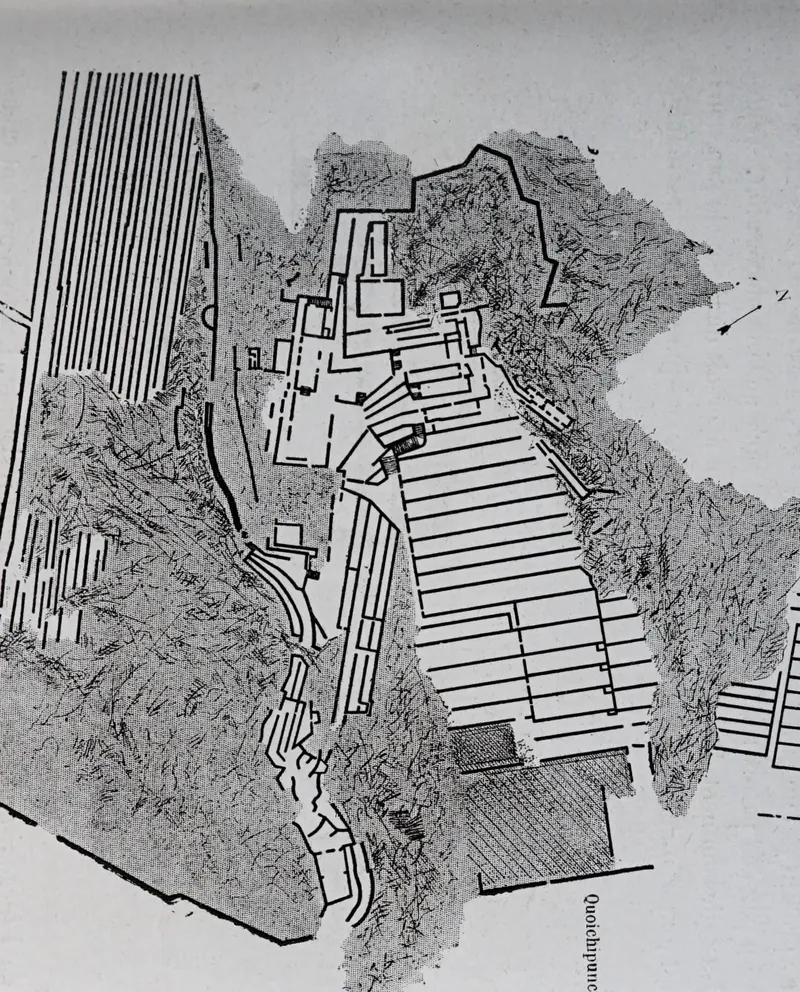
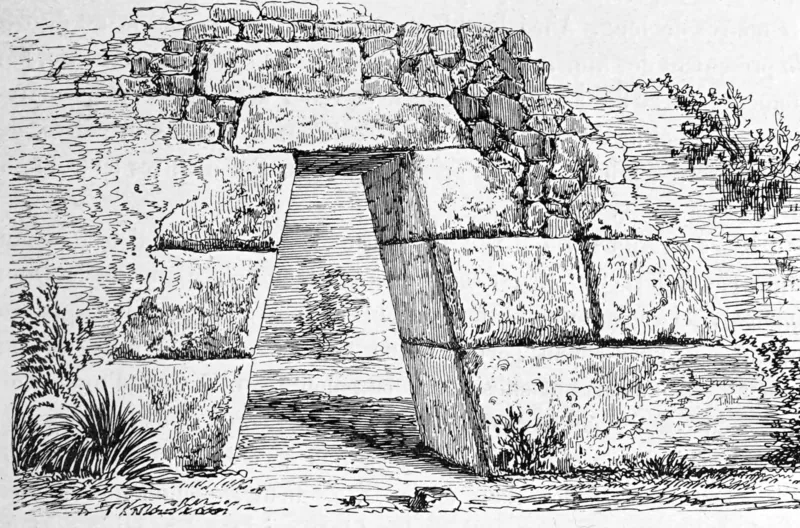
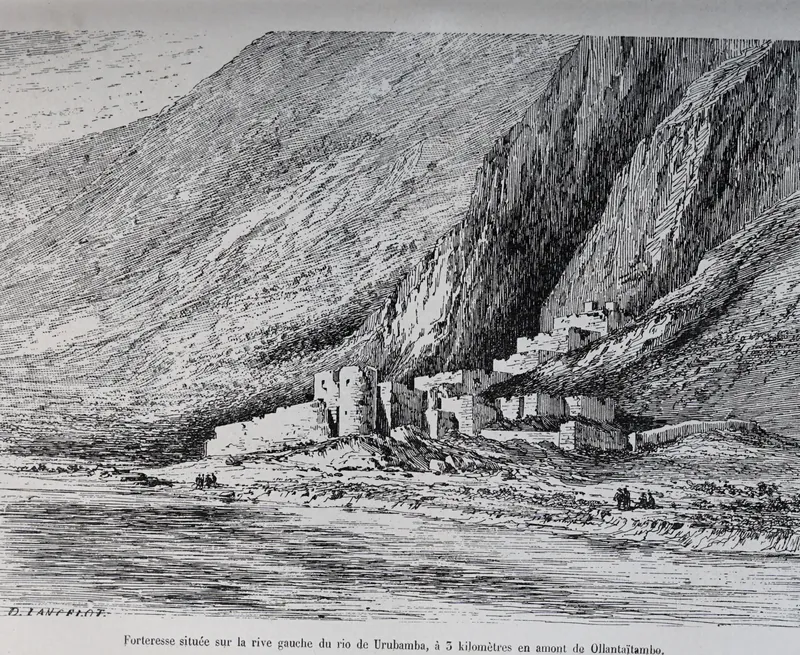
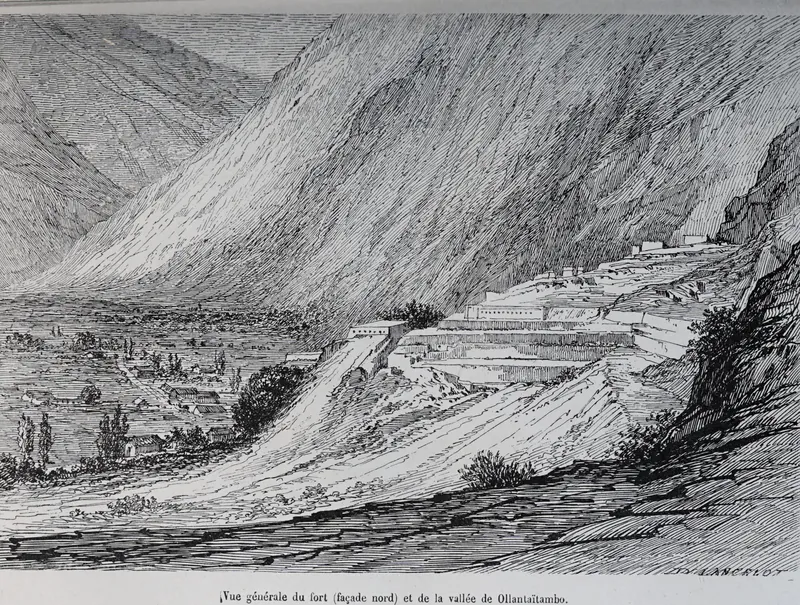
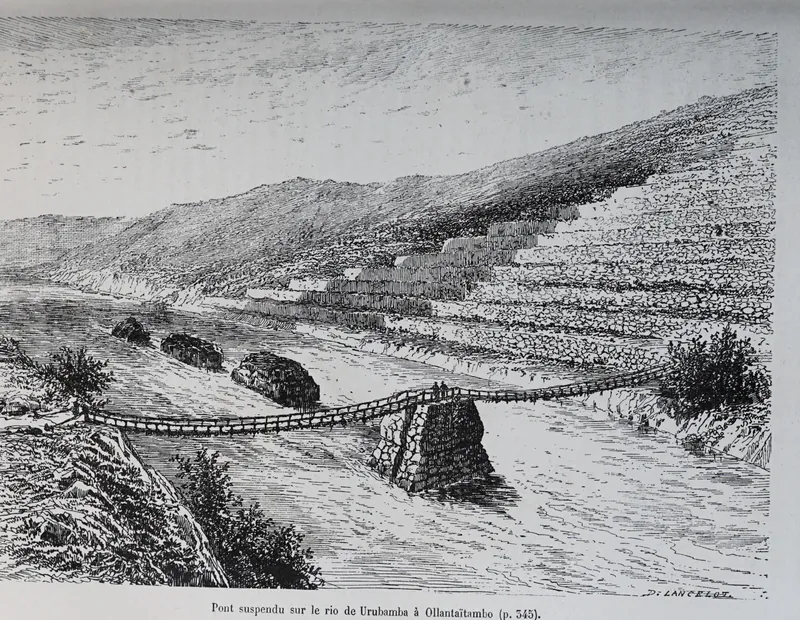
From the plates Pérou et Bolivie · Paris, 1880