One of the world's greatest expeditions, translated into English for the first time, from the 1925 first edition.
LT·010 · DE · Germany · 1925 · Exploration / Archaeology
The account as written · German, 1925
Mongolei, Amdo und die tote Stadt Chara-Choto
- Author
- P. K. Kozlov
- First published
- 1925 · Germany
- Written in
- Deutsch (German)
- Status
- First English Translation
- Stage
- The whole German edition · translation complete
Our English edition · first, after 101 years
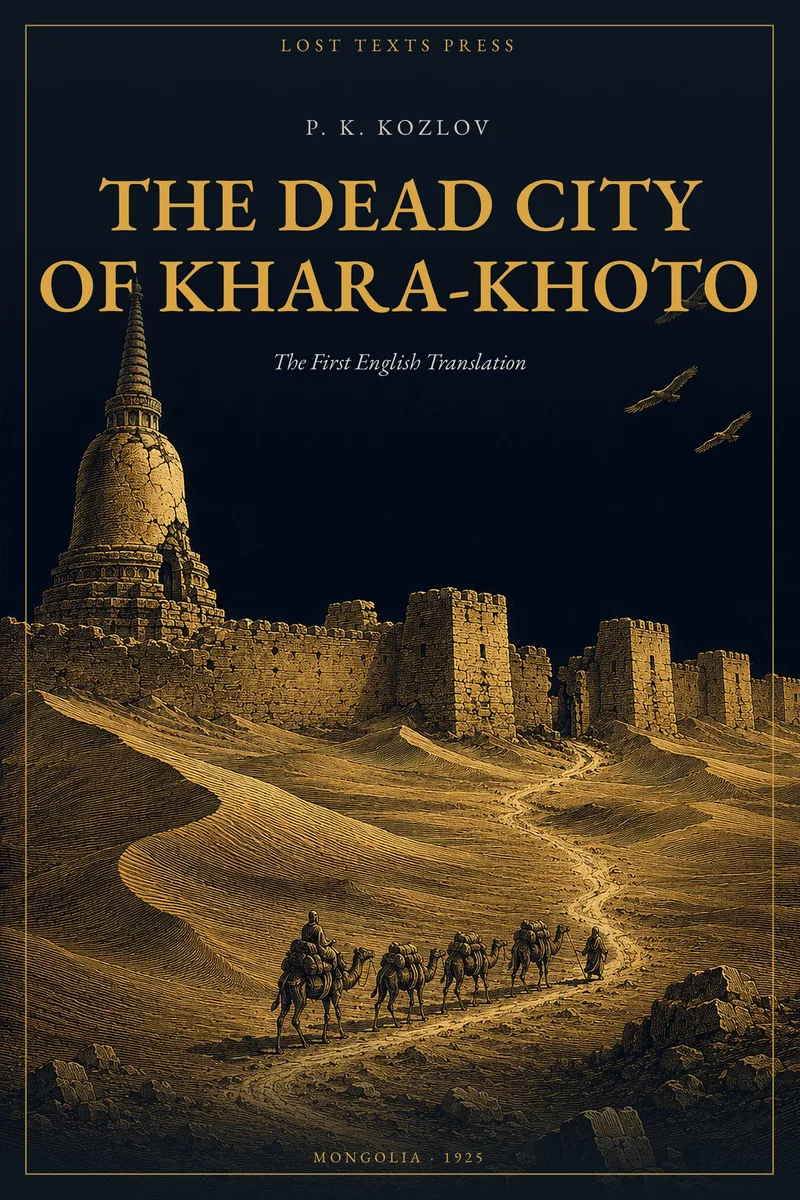
The Dead City of Khara-Khoto
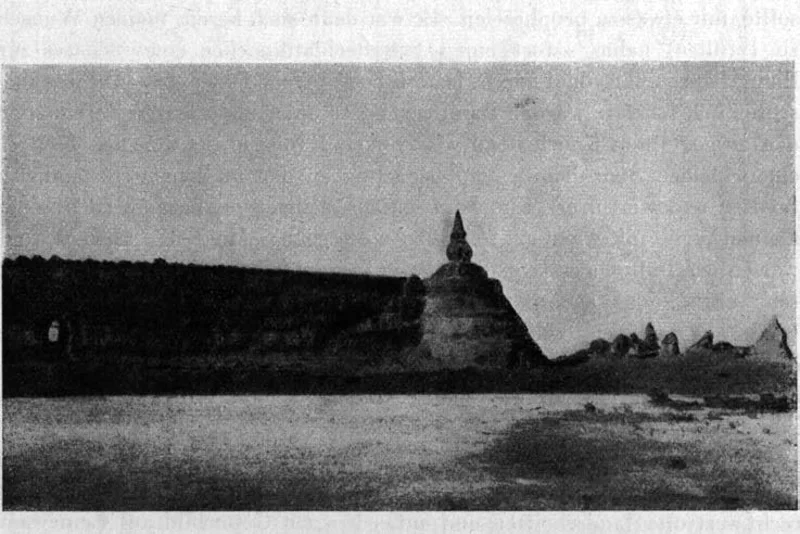
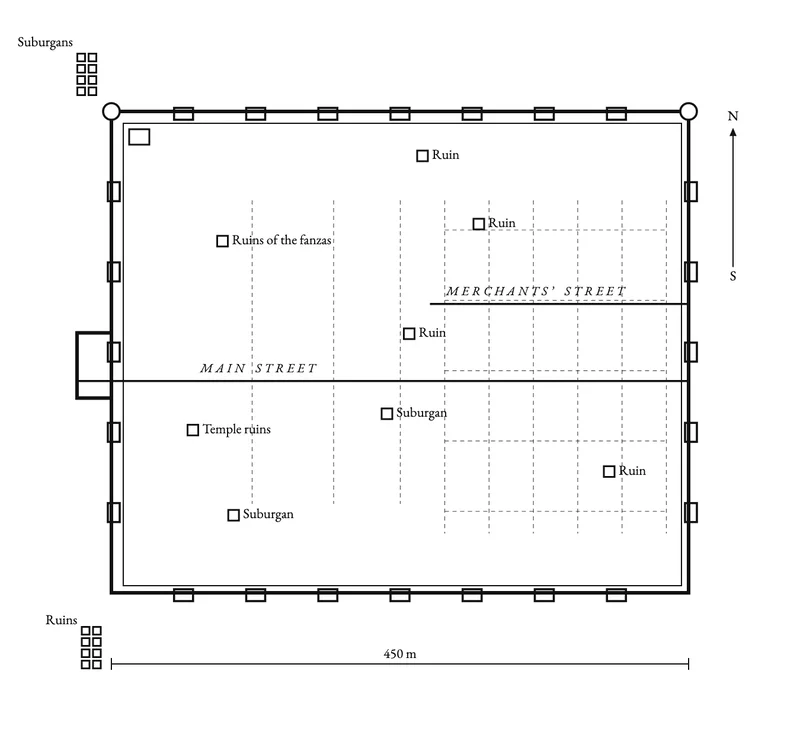
Pyotr Kozlov went into Asia as a young soldier on Przhevalsky’s last expedition and came back thirty years later leading his own. In 1907 he took the Russian Geographical Society from Kyakhta across Mongolia and the Gobi to Lake Kuku-Nor and the Tibetan borderlands of Amdo. On the way he turned aside to the Etsin-gol, where a Torgut prince had told him of ruins in the sand. Khara-Khoto, the Black City, had been left to the desert around 1372. Outside its wall stood a suburgan. He opened it in 1908 and went back the next year for the rest.
What came out of it was a library: thousands of books, scrolls and paintings in Tangut, a language no living person could read, along with some of the earliest colour printing that survives anywhere. The find created the study of Tangut out of nothing and is still the foundation of it. The expedition then wintered in Amdo, sounded Kuku-Nor for the first time, and spent a fortnight at Kumbum with the Thirteenth Dalai Lama, in exile from Lhasa.
Kozlov wrote it up in Russian in 1923. Two years later Wilhelm Filchner edited an authorised German edition with a foreword by Sven Hedin, and it is that edition — the one Kozlov approved for Europe — which is translated here. It has never appeared in English.
The jacket · as it will be printed
The Dead City of Khara-Khoto
There was something endlessly moving in touching with the hands all these things which had remained so long hidden from human eyes; their old lustre had not faded, the delicate blue colours shone out of these treasures in their most original beauty.
Chapter XV, on opening the suburgan at Khara-Khoto
Back cover
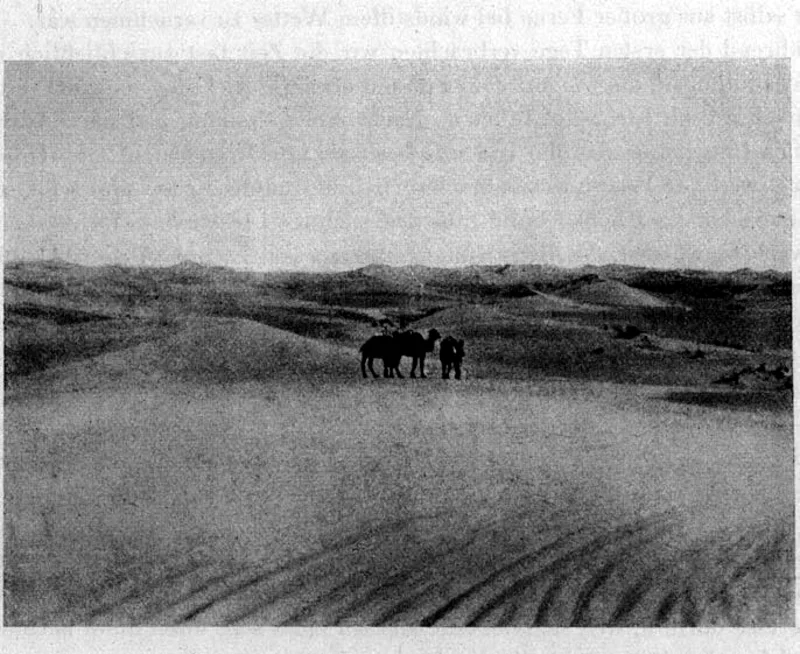
The Mongols called it Khara-Khoto, the black city. It sat alone in the Gobi desert behind its own walls, empty for five hundred years, with the sand drifting up over the top. Caravans passed by without going in. In 1908 a Russian explorer named Pyotr Kozlov found a guide who would take him inside, and he began to dig.
He found a library. Just outside the western wall stood a stupa, a domed Buddhist shrine. Kozlov's men opened it and lifted out thousands of books and manuscripts, along with paintings, coins, and statues of the dead city's gods. The books were written in Tangut, a language almost no one could still read. It remains the largest find of its kind in Central Asia, and it fills only the first part of this book.
The expedition kept going. It spent the winter in Amdo, on the Tibetan border. It measured the depth of Lake Kuku-Nor, which no one had done before. And at the monastery of Kumbum, Kozlov spent two weeks talking with the Thirteenth Dalai Lama, who was living there in exile.
The books went to St Petersburg, where scholars are still reading them. The city is still in the sand.
Published in Berlin in 1925, from Kozlov's Russian. Never into English.
Inside cover
Khara-Khoto is the find everyone has heard of and almost nobody has read. It is the reason the Tangut language can be read at all: before 1908 the script was a curiosity on a handful of stelae, and after it there was a literature. The books went into the Asiatic Museum at St Petersburg, where they still are, and the scholarship built on them has run for over a century in Russian, Chinese and Japanese. The account by the man who dug them up has run in Russian, German and Chinese. Not in English.
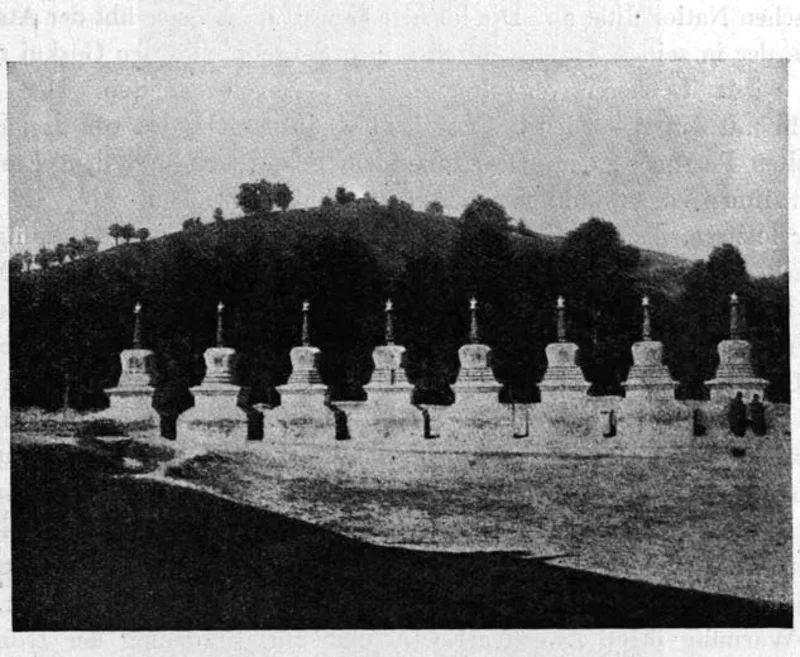
The book is not only the dig. Khara-Khoto occupies the first of its three parts. After it the expedition turned south into Amdo, on the Tibetan marches of western China, and wintered there. Kozlov sounded Lake Kuku-Nor and found it deeper than the maps allowed. He stayed at the monastery of Kumbum, where the Thirteenth Dalai Lama was living out his flight from the British expedition to Lhasa, and the two of them talked over a fortnight. What he sets down about those conversations is a first-hand European record of a man almost no European met.
He is a good writer in a plain way, and an unusually honest one about failure and about cost. The stupa gave up its contents in disorder and he says so. Cloth came apart in his hands and he says that too. The appendix on Tibet, taken from a second Russian book of his, leans openly on Tsybikov and Sarat Chandra Das where his own knowledge stops.
This edition translates the whole of the authorised German edition of 1925: Hedin’s foreword, Filchner’s introduction, the fifteen chapters, the appendix on Tibet. Every one of the 127 illustrations in the original list is here, and the three maps have been redrawn in English rather than reproduced untranslated. Kozlov’s and Filchner’s own notes are kept apart from the editorial ones.
One limit is stated plainly, on the copyright page and twice more inside. The German of 1925 is not the whole of Kozlov’s Russian: Filchner says it gives the events of general interest and leaves out the purely scientific problems and tables. The narrative is translated here entire. The apparatus the German editors dropped in 1925 is not recovered here, and recovering it is a different job, to be done from the Russian.
- First English translation
- Translated from the authorised German edition, Berlin: Neufeld & Henius, 1925
- Complete · foreword, introduction, fifteen chapters, appendix
- 183 notes: 28 of the 1925 edition, 155 editorial and marked as such
- 127 illustrations, and three maps redrawn in English
- Every reconstruction from the damaged scan recorded
The first English edition in 101 years.
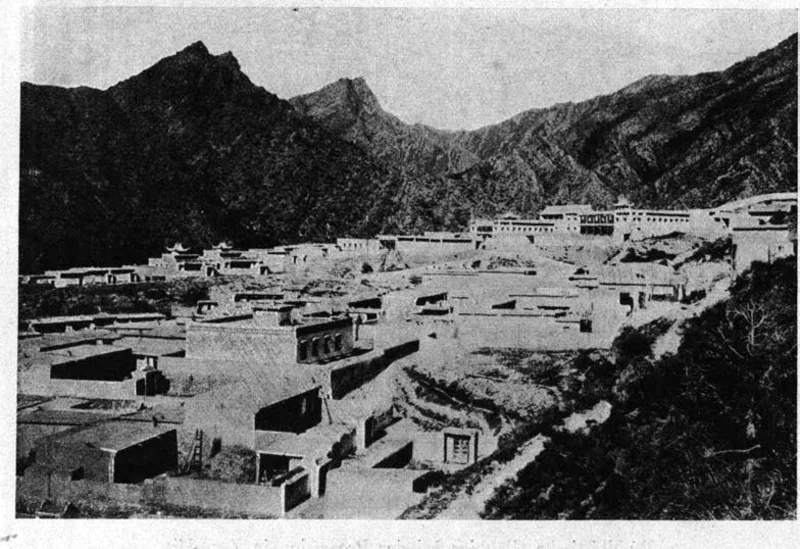
From the plates Mongolei, Amdo und die tote Stadt Chara-Choto · Berlin, 1925